 Connect Sign In


Tony Smith Brings a Patient-Focused, Analytic Approach to Clinical Laboratory Consulting Projects


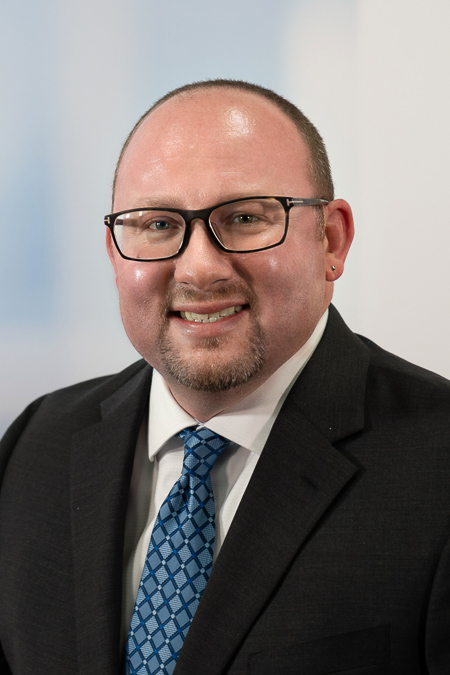
Tony Smith, BSHCM, MLT(ASCP)CM, CLSSBB, was in college and working toward medical school when his mother became seriously ill. He chose to step away from college to help his family and found his plans for the future becoming less certain. Then, one of his friends who was studying medical laboratory science (MLS) suggested that Smith consider a two-year medical laboratory technician program at the technical college.
“I knew I needed to keep going to school. But I knew it wasn't going to be the medical school path that I had wanted,” Smith said. “When my friend was telling me about the MLS program and lab science, I thought, well, that sounds like it’s aligned more with my strengths and interests, especially compared with the bureaucracy that often comes with clinical practice today.”
Now a senior healthcare consultant with ARUP Healthcare Advisory Services, Smith has forged a career that’s enabled him to improve the lives of patients while helping clinical laboratories operate to their fullest potential.
Smith worked as a specimen processor and a phlebotomist while in college, and that experience sparked a passion for working in pediatrics. “I was really good with kids,” he said. “I could get along with them and make them feel comfortable—and then stick a needle in their arm and still get them to smile and walk away happy.”
As a phlebotomist, he got to see how various parts of the hospital functioned, from the emergency department to postsurgical care to the pediatric department. “Being involved in that level of the organization expanded my bandwidth as far as experience, because many laboratorians have only ever worked in a lab setting,” Smith said.
After earning his associate degree as a medical laboratory technician, Smith worked in transfusion medicine for Mayo Clinic Laboratories, where he gained further clinical experience and greater exposure to the reference laboratory setting. Then, seeking a somewhat warmer climate, he left Minnesota for Denver, Colorado, and joined Children’s Hospital Colorado in 2005. Smith started in a technical role at Children’s Colorado, but his analytic approach and attention to detail soon propelled him into operational roles, starting with the creation of the laboratory’s client services department.
“I helped manage a lot of preanalytic processes for specimen processing, sendouts, and the client services team. We were focused on improving processes, creating a structure to better utilize purchased services and resources with our reference laboratories,” he said.
This work ultimately led to the development of the laboratory stewardship program at Children’s Colorado. Smith started by working with the organization’s medical director to review and approve orders for certain high-cost tests. “I had implemented stewardship before I knew it to be stewardship,” he said. “We were a pediatric academic institution using 155 reference labs. Providers had no guardrails. If it existed in a catalog, someone was ordering it.”
At first, Smith tackled stewardship without an official role or title and without a stewardship committee to guide the work. “We were just hobbling along and trying to keep up with things,” he said. After a couple of years, he helped spearhead the development of a formal stewardship committee. He worked collaboratively across departments to build a committee structure, identify projects, and implement a test review model.
Thanks to Smith’s leadership, in 2013, Children’s Colorado became a founding member of Patient-centered Laboratory Utilization Guidance Services (PLUGS), a collaborative that now includes roughly 200 member organizations.
“Lab stewardship and test utilization have been a big focus of this stage of my career,” said Smith, who joined ARUP Healthcare Advisory Services in 2021. Now, he draws on his real-world experience in a clinical laboratory to help other labs as they work to strengthen stewardship efforts, improve processes and workflows, and implement analytics tools.
Smith said this lived experience is a unique advantage of working with ARUP’s consultants. “We relate to our clients because we’ve walked the same paths. We’ve been through accreditation cycles. We’ve been through operational improvement cycles. We’ve been through leadership transitions. That shared background gives us practical, grounded experience.”
The 16 years Smith spent at a pediatric hospital remain foundational to how he approaches his work as a consultant. “Children are the most fragile population of patients, and this magnifies the importance of providing a high standard of care,” he said. “I feel blessed that as part of ARUP, I get to be a voice for children and help improve services for pediatric patients.”